
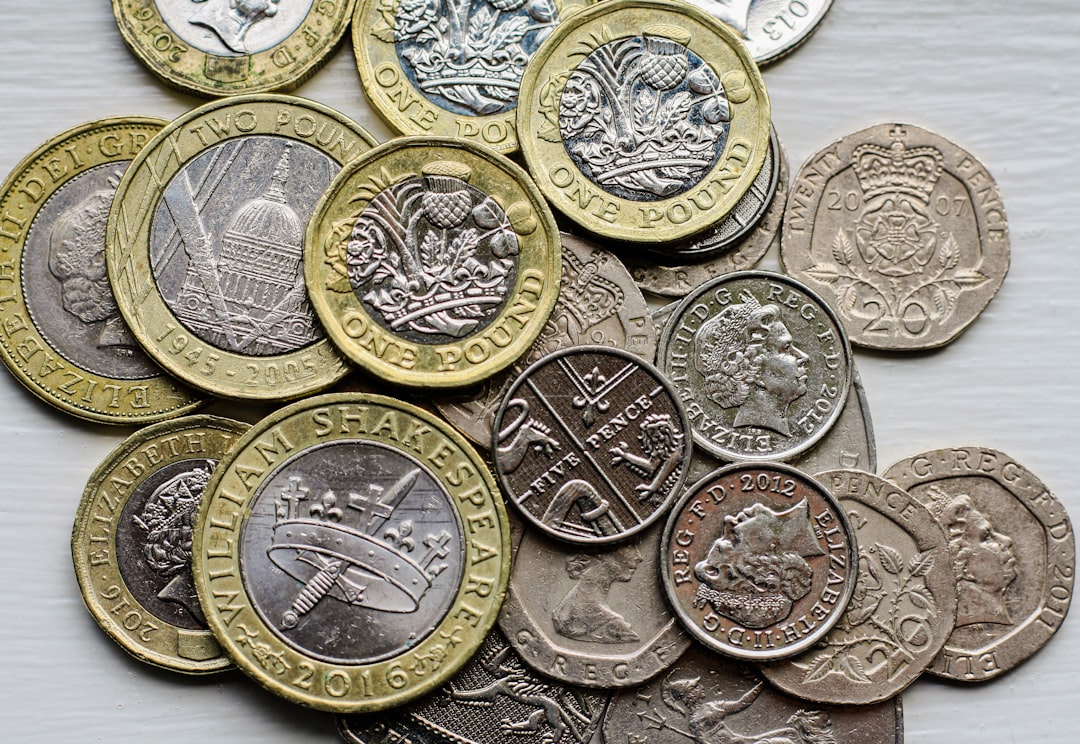
Photo by Sarah Agnew on Unsplash
Inflation is a slow, invisible tax on cash savings. If your savings account earns 3.5% interest and inflation is running at 4%, your money is losing purchasing power at 0.5% per year — every year. You have more pounds in the account, but those pounds buy less. Over a decade, the effect is significant.
This guide explains what inflation does to savings, how to measure whether your money is keeping up, and the practical options for protecting and growing your purchasing power.
The Real Return Problem
The number that matters isn’t your interest rate — it’s your real return, which is your interest rate minus inflation.
| Savings rate | Inflation | Real return |
|---|---|---|
| 5.0% | 3.0% | +2.0% (ahead of inflation) |
| 4.0% | 4.5% | -0.5% (losing purchasing power) |
| 1.5% | 3.5% | -2.0% (significant real loss) |
| 0.1% | 4.0% | -3.9% (what UK savers experienced in 2021) |
Many UK savers spent much of the 2010s earning near-zero interest while inflation quietly eroded their savings. The instinct to “keep it safe in cash” is understandable but can be expensive over the long term.
Check Your Current Savings Rate
The first step is knowing your actual interest rate. Check your online banking app or your last savings statement. If you’re on an old easy-access account, you may be earning significantly below the current best rates — banks are not required to automatically move you to better deals when rates rise.
The best easy-access rates in 2026 are typically available from:
– Online-only banks and fintech savings platforms
– Cash ISAs from newer providers
– Regular savers from high street banks (often better rates but with monthly deposit caps)
Use a comparison site like MoneySavingExpert’s savings best buys table or Moneyfacts to see what’s available. The difference between the worst and best easy-access rates can be 2–3 percentage points.
The Right Tool Depends on Your Time Horizon
No single savings or investment vehicle is right for all money. The key variable is when you’ll need it:
Money you might need within 12 months (emergency fund, near-term purchases): Keep in cash. Even a real return of -1% is better than the risk of needing money invested in markets during a downturn. Focus on maximising your interest rate through competitive savings accounts or a cash ISA.
Money you won’t need for 2–5 years: Consider a fixed-rate savings account or a fixed-rate cash ISA. Locking in a rate above current inflation gives you a positive real return for a defined period. The trade-off is restricted access — early withdrawal typically forfeits interest.
Money you won’t need for 5+ years: This is where the case for investing becomes compelling. Equities have historically outpaced inflation by 4–6% per year over long periods — but with volatility along the way.
Savings Accounts That Beat Inflation
If cash is your preferred option (for risk reasons or time horizon), you still have options to maximise returns:
High-yield easy-access accounts: Digital banks (Chip, Zopa, Trading 212 Cash ISA, Moneybox) regularly offer competitive easy-access rates. Check current best buys monthly — rates change.
Fixed-rate bonds: Fixed for 1–5 years at a guaranteed rate. If you’re confident you won’t need the money in that period, 2-year or 3-year fixes often offer better rates than easy-access options.
Premium Bonds: NS&I Premium Bonds don’t pay guaranteed interest — instead you enter monthly prize draws. The prize fund rate (equivalent to an interest rate) is currently competitive with easy-access savings, and prizes are tax-free. The downside is variability — you might win nothing in a given month.
Cash ISAs: Interest earned inside an ISA is always tax-free. For basic rate taxpayers, this matters less (you get £1,000 of interest tax-free anyway via the Personal Savings Allowance). For higher-rate taxpayers with significant savings, cash ISAs shelter returns efficiently.
Investing to Beat Inflation Over the Long Term
For money you won’t need for 5+ years, the historically superior approach to inflation-proofing is investing in equities.
Why equities beat inflation over time: Companies generate revenue that tends to rise with prices — when inflation is high, companies generally charge more for their products, and profits (and therefore share prices) tend to keep pace. This is why equities have returned roughly 5–7% real (after inflation) annually over the past century.
This doesn’t mean equities are safe in the short term — market crashes of 30–50% happen, and your money can fall significantly in value. The long-term outperformance only materialises if you stay invested through those downturns.
Practical options for UK investors:
– Stocks and shares ISA with a global index tracker — the simplest and most evidence-backed approach. Low fees (0.1–0.25% annual charge), diversified globally, tax-free growth.
– Workplace pension — already invested in equities for most people in default funds. Increasing contributions is one of the most efficient ways to deploy money over the long term.
– SIPP (Self-Invested Personal Pension) — if you want more control over investment choice within a pension wrapper.
Index-Linked Savings Certificates and Gilts
NS&I Index-Linked Savings Certificates — these were the original inflation-proof savings product, guaranteed to match RPI inflation plus a small real return. They’ve been unavailable to new purchasers since 2011, but if you hold existing ones, they remain one of the best inflation hedges in existence. Don’t cash them in unnecessarily.
Index-linked gilts — UK government bonds whose value rises with inflation (specifically RPI). Available to retail investors via bond funds or directly. Complex to buy individually; simpler to access through a gilt index fund.
What Probably Won’t Protect You
Gold: Gold is often cited as an inflation hedge. Historically the evidence is mixed — gold performed well during the 1970s inflationary period but has had extended periods of underperformance. It generates no income and has high volatility. It’s a speculation, not a reliable hedge.
Property: Property can keep pace with inflation over long periods, but it’s illiquid, costly to buy and sell, concentrated in a single asset, and requires leverage for most buyers. It’s a complex inflation hedge, not a simple one.
Cryptocurrency: Not a proven inflation hedge. Bitcoin and other cryptocurrencies have shown high correlation with risk assets rather than inflation protection.
According to the Bank of England’s inflation calculator, £10,000 in 2000 would need to be £19,800 today to have the same purchasing power. That’s the scale of what unprotected cash savings lose over a generation.
Conclusion
Protecting your savings from inflation requires action — doing nothing means losing purchasing power quietly but reliably.
- Start by maximising your savings rate — the gap between the worst and best easy-access accounts is meaningful and requires no investment risk
- Keep short-term money in cash but shop around — a competitive rate may not beat inflation entirely but reduces the damage
- For money you won’t need for 5+ years, investing in a low-cost equity index fund is the most reliable long-term inflation hedge — supported by over a century of evidence
- Stocks and shares ISAs and pensions are the tax-efficient wrappers for that investment — use them before a general investment account
- Avoid the trap of equating “safe” with “cash” — cash held in low-interest accounts isn’t safe from inflation, even if it feels safe from markets
Next read: Ready to put your savings to work? Read our guide on how to invest in index funds for beginners: /how-to-invest-in-index-funds-for-beginners