
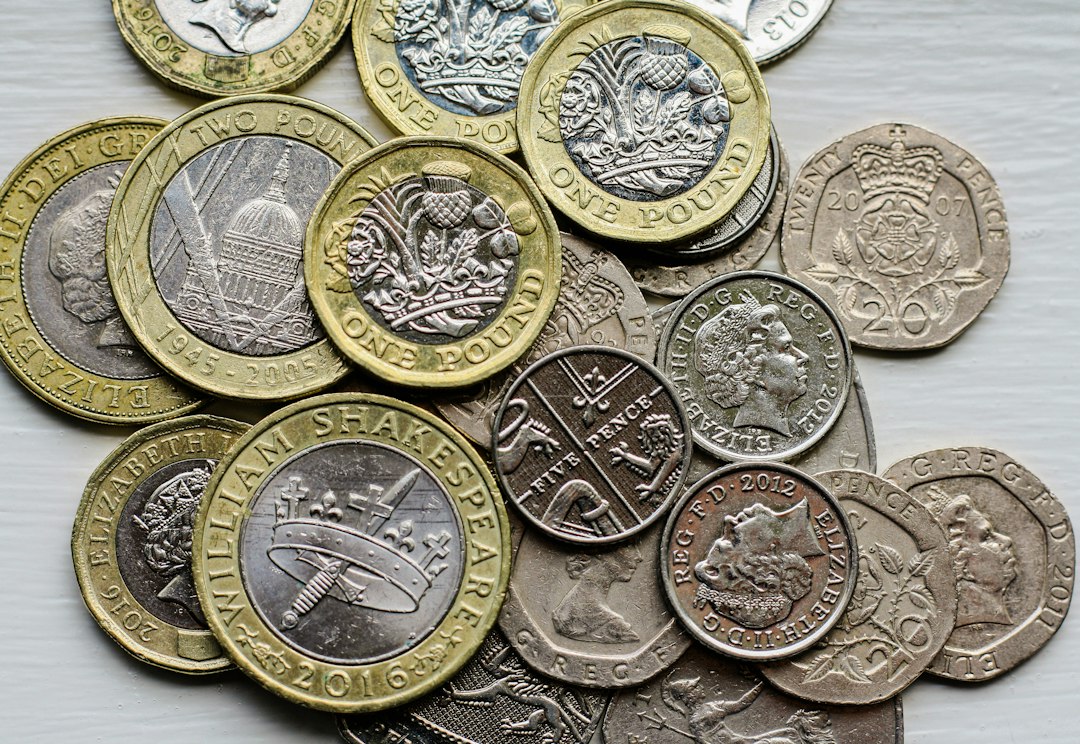
Photo by Sarah Agnew on Unsplash
If you’ve got a few thousand pounds sitting in a current account earning next to nothing, you’re not alone — and you’re also quietly losing money to inflation every month it stays there. The good news is that savings rates in 2026 are a lot more respectable than they were a few years ago. The confusing part is that “best” depends entirely on what you need the money for, and the comparison tables you’ll find online don’t always make that clear.
This isn’t a list of specific providers — rates change weekly, and what’s top of the table in January can drop out by March. Instead, this is about understanding the different types of high interest savings accounts available in the UK right now, what trade-offs each one involves, and how to actually compare them properly so you’re not just chasing a headline number that doesn’t apply to you.
Why savings rates keep changing (and why that matters for you)
Savings account interest rates are closely tied to the Bank of England base rate — the rate the central bank sets, which influences how much banks pay you to hold your money and how much they charge you to borrow it. When the base rate rises, savings rates tend to follow (eventually, and not always as fast as they should). When it falls, savings rates drop too.
This means any “best rate” you see quoted today could look different in a few months. It also means fixed-rate accounts — where you lock your money away for a set period in exchange for a guaranteed rate — can be a gamble. Lock in now and rates might rise further, leaving you stuck on a lower return. Or rates might fall, and you’ll be glad you locked in.
You can check the current base rate and recent changes on the Bank of England’s website, which gives useful context before you compare specific savings products.
The main types of savings accounts — and what each one is actually for
Before chasing the highest number, work out which category fits your situation. These aren’t interchangeable.
Easy access accounts let you withdraw money whenever you want, usually with no penalty. Rates are typically a bit lower than fixed or notice accounts, but you keep flexibility. This is the right home for an emergency fund — money you might need at short notice for a boiler breakdown or job loss.
Notice accounts require you to give a set period of notice (commonly 30, 60, or 90 days) before withdrawing. In exchange, you usually get a slightly better rate than easy access. Useful if you know you won’t need the money immediately but want more flexibility than a fixed bond.
Fixed-rate bonds lock your money away for a set term — often 1, 2, or 5 years — at a guaranteed rate. These tend to offer the highest rates of the three, but you’ll usually pay a penalty (or lose interest entirely) if you need the money early. Only put in what you’re confident you won’t need.
Regular savers require you to pay in a fixed amount each month (often capped at a few hundred pounds) and reward you with a notably higher rate than standard accounts. Good for building a habit, but the cap means they’re not useful for parking a lump sum.
Cash ISAs (Individual Savings Accounts) let your savings interest grow completely free of tax, up to an annual allowance set by the government — currently £20,000 across all ISA types combined. For most basic-rate taxpayers with modest savings, this matters less than you’d think, because of the Personal Savings Allowance (see below). But if you’re a higher earner, or you’re building up larger savings over time, the tax-free wrapper becomes genuinely valuable.
The misconception that trips people up: “ISA always beats a normal savings account”
This used to be straightforwardly true. It isn’t anymore, for most people.
Since 2016, the UK has had a Personal Savings Allowance: basic-rate taxpayers can earn up to £1,000 a year in savings interest tax-free, in any normal savings account — no ISA required. Higher-rate taxpayers get a £500 allowance. Additional-rate taxpayers get nothing.
So if you’re a basic-rate taxpayer with, say, £15,000 in savings, you’d need a very high interest rate indeed to breach that £1,000 tax-free threshold. In practice, a standard easy access account might actually pay a better rate than the equivalent cash ISA, because providers don’t need to offer as much of a premium for the tax wrapper.
Where ISAs genuinely win: if you’re a higher or additional-rate taxpayer, if your savings pot is large, or if you expect interest rates (and your balance) to grow significantly over the coming years. In that case, the tax-free shelter becomes worth protecting, and it’s worth building the habit of using your ISA allowance even if the immediate tax saving feels small now.
Check the current Personal Savings Allowance rules and your own position on gov.uk.
How to actually compare accounts properly
Headline rates are only half the story. Before you open anything, check these four things:
- Is the rate fixed, variable, or a bonus rate? Some easy access accounts advertise an attractive rate that includes a temporary bonus for the first 12 months, which then drops. Read the small print for what happens after year one.
- Minimum and maximum deposits. Some top-rate accounts only apply the advertised rate up to a certain balance, with the excess earning a lower rate.
- Access restrictions. “Easy access” sometimes means limited withdrawals per year before the rate drops — check the terms, not just the label.
- FSCS protection. The Financial Services Compensation Scheme protects up to £85,000 per person, per banking institution, if the provider fails. If you’re holding more than that, consider spreading it across different institutions (not just different accounts with the same bank — check who the banking licence actually belongs to, as some brands share one).
A practical comparison: matching account type to your situation
| Your situation | Likely best fit | Why |
|---|---|---|
| Emergency fund, might need it anytime | Easy access account | No penalty for withdrawing, rate still respectable |
| Known lump sum, won’t touch for 1–2 years | Fixed-rate bond | Usually the highest guaranteed rate, if you can commit |
| Building a savings habit from scratch | Regular saver | Strong rates on monthly contributions, encourages consistency |
| Higher-rate taxpayer with meaningful savings | Cash ISA | Shelters interest from tax as balance grows |
| Basic-rate taxpayer with under ~£20,000 saved | Standard easy access or notice account | Personal Savings Allowance likely covers the tax anyway, and rates are often better |
| Money you won’t need for 3+ years and want flexibility to move it between cash and investments | Mix of cash ISA and stocks & shares ISA | Keeps options open as the full £20,000 allowance can be split |
Don’t let “finding the best rate” become the reason you do nothing
It’s tempting to hold off opening any account because you’re waiting to find the “perfect” one, or because you’ve read that rates might rise again soon. In reality, the gap between a good rate and the technically best rate on any given day is usually small — a fraction of a percent. The much bigger cost is leaving money in a current account earning little or nothing while you deliberate.
A reasonable approach: open a solid easy access account now for anything you might need at short notice, and only commit to a fixed-rate bond once you’re confident about money you genuinely won’t touch for the term. You can always move money later — most providers make switching reasonably simple, and comparison sites update regularly.
Watch out for “headline rate” accounts with conditions
Some of the highest-advertised rates in any given month come with conditions that quietly reduce what you actually earn: a cap on the balance that earns the top rate, a requirement to not withdraw for the whole year, or a bonus rate that disappears after month twelve. Always check the Annual Equivalent Rate (AER) — this is the standardised figure that shows what you’d actually earn over a year, accounting for how often interest compounds, making it the fairest way to compare accounts side by side.
The bottom line
- Match the account to the purpose, not just the rate. Emergency money belongs in easy access; money you won’t touch belongs in a fixed bond or notice account.
- Check your Personal Savings Allowance before assuming an ISA is automatically better. For many basic-rate taxpayers, it isn’t.
- Always compare the AER, not the headline number, and read what happens to the rate after any introductory bonus period ends.
- Confirm FSCS protection if you’re holding savings above £85,000, and spread it across separate banking licences if needed.
- Don’t let the search for the “best” account stop you from opening a decent one this week — the cost of delay is almost always higher than the cost of missing the top spot on a comparison table by 0.1%.
Next read: none